
The Belonia Bulge stands out as one of the most symbolically and strategically significant liberated zones in Sector 1 during the 1971 Bangladesh Liberation War. This narrow salient of East Pakistani territory—protruding into India's Tripura state along the Muhuri River in parts of present-day Feni district—became the scene of intense battles and one of the earliest areas to come under sustained Mukti Bahini control.
Its liberation disrupted Pakistani logistics, boosted morale across Bangladesh, and demonstrated the freedom fighters' ability to hold territory against repeated counterattacks
Fierce engagements in the Belonia Bulge, where Mukti Bahini forces battled for control.Geography and Strategic ValueThe Bulge measured roughly 16-20 km long and 4-8 km wide, bounded by the Muhuri River. Its shape created a vulnerable protrusion threatening Pakistani lines between Chittagong and Dhaka.Key roads and a metre-gauge railway ran through it, making it a logistical choke point. Proximity to Tripura enabled easy infiltration from Indian training camps and arms supplies.Sector 1 encompassed the Bulge, with operations often coordinated with Sector 2 forces.The Three Battles of Belonia BulgeThe Bulge saw three major phases of fighting:
Tags: Bangladesh Liberation War 1971, Belonia Bulge, Liberated Zone Sector 1, Battles of Belonia, Captain Jafar Imam, Muhuri River Feni, Mukti Bahini Victories, Muktijuddho, Joy Bangla
Fierce engagements in the Belonia Bulge, where Mukti Bahini forces battled for control.Geography and Strategic ValueThe Bulge measured roughly 16-20 km long and 4-8 km wide, bounded by the Muhuri River. Its shape created a vulnerable protrusion threatening Pakistani lines between Chittagong and Dhaka.Key roads and a metre-gauge railway ran through it, making it a logistical choke point. Proximity to Tripura enabled easy infiltration from Indian training camps and arms supplies.Sector 1 encompassed the Bulge, with operations often coordinated with Sector 2 forces.The Three Battles of Belonia BulgeThe Bulge saw three major phases of fighting:
- First Battle (June 1971) → Mukti Bahini forces, led by Captain (later Major) Jafar Imam from Sector 2, infiltrated in early June. They quickly overran positions, liberating parts of Feni and establishing a base for the provisional government.
- Pakistani Counterattacks → Heavy reinforcements attempted recapture, leading to intense sieges. Combined Sector 1 and 2 guerrillas defended tenaciously.
- Second and Third Battles (July-November 1971) → Sustained encirclement and assaults forced Pakistani surrenders. On November 10, a captain and 72 soldiers laid down arms. Captain Jafar Imam raised the Bangladesh flag at Parshuram and Belonia amid jubilant celebrations.
- Mukti Bahini fighters in action during the Belonia Bulge campaigns.
- Training and medical facilities operated openly.
- Civilians returned, farming and supporting fighters.
- It served as a launchpad for raids on nearby highways.
- Severed key supply routes.
- Tied down Pakistani divisions.
- Inspired resistance nationwide.
- Facilitated the December offensive toward Chittagong.
Tags: Bangladesh Liberation War 1971, Belonia Bulge, Liberated Zone Sector 1, Battles of Belonia, Captain Jafar Imam, Muhuri River Feni, Mukti Bahini Victories, Muktijuddho, Joy Bangla
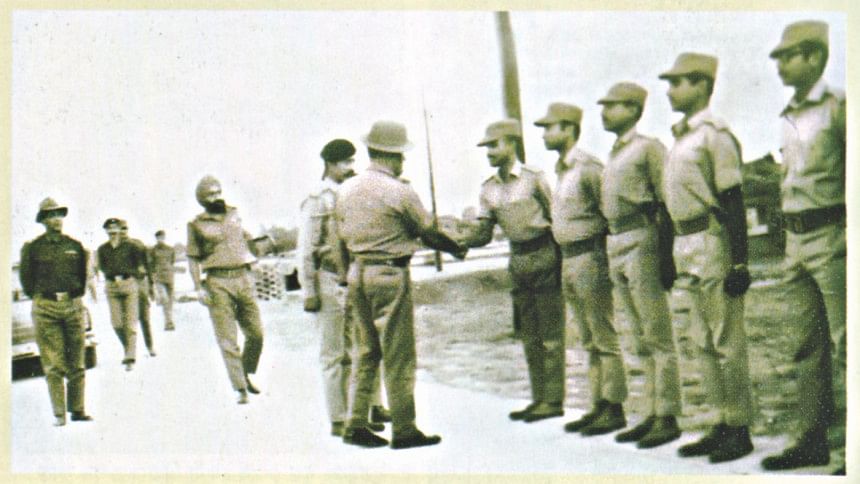
Mukti Bahini in fierce combat during the Battles of Belonia Bulge
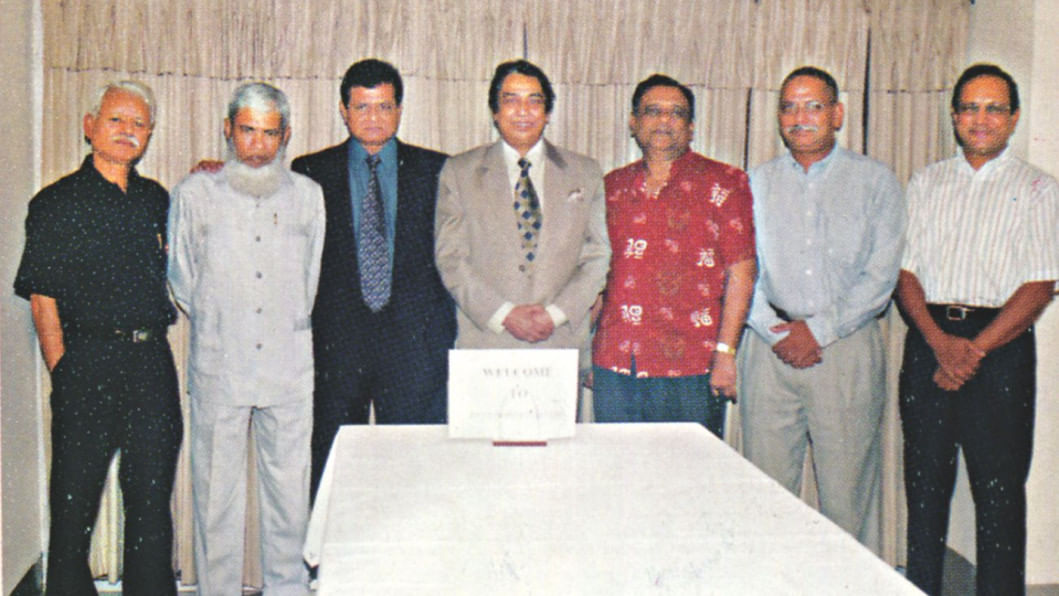
Freedom fighters advancing in the Belonia Bulge

Mukti Bahini team securing the liberated zone

Operations in the Belonia Bulge area, 1971

The daring fighters of Belonia Bulge
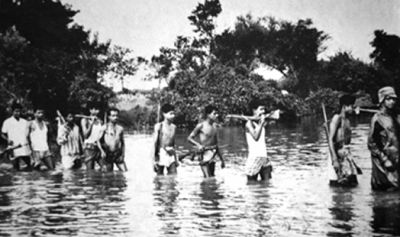
Guerrilla warfare in the Belonia region
Sector 1 Visual Gallery • 1971 Bangladesh Liberation War