
The Belonia Bulge enclave held immense strategic importance during the 1971 Bangladesh Liberation War, serving as a critical flashpoint in Sector 1. This narrow protrusion of East Pakistani territory into India's Tripura state along the Muhuri River threatened Pakistani supply lines, facilitated Mukti Bahini infiltrations, and became one of the earliest fully liberated zones.
Its position amplified guerrilla effectiveness, drew enemy resources, and provided a psychological victory that inspired the broader resistance.Geographical Layout and VulnerabilitiesThe Bulge formed a salient roughly 16-20 km long and 4-8 km wide, bounded by the Muhuri River. This shape created a vulnerable "finger" easily encircled, while its roads and metre-gauge railway linked Chittagong to Feni and onward to Dhaka.Control of the Bulge directly impacted the Dhaka-Chittagong highway—a primary artery for Pakistani troop movements and supplies from Chittagong Port.The enclave's border with Tripura allowed short, secure infiltration routes from Indian training camps, making it a natural gateway for Sector 1 operations.Logistical Disruption to Pakistani ForcesHolding or contesting the Bulge denied Pakistanis safe passage on key routes. Mukti Bahini ambushes and sieges forced convoys into detours, delaying reinforcements and exposing them to further attacks.The railway through the Bulge transported materiel; its interruption compounded port blockades from Operation Jackpot.By mid-1971, Pakistani counteroffensives to recapture the area diverted significant troops (elements of multiple brigades), weakening defenses elsewhere in the southeast.Operational Advantages for Mukti BahiniThe enclave's location enabled:
- Rapid Infiltration — Fighters crossed from Tripura undetected, launching raids deep into enemy territory.
- Liberated Zone Benefits — Once secured (by November 1971), it hosted training, medical aid, and administrative functions—a "mini free Bangladesh."
- Coordination Hub — Operations often joint with Sector 2, amplifying pressure on Feni-Noakhali areas.
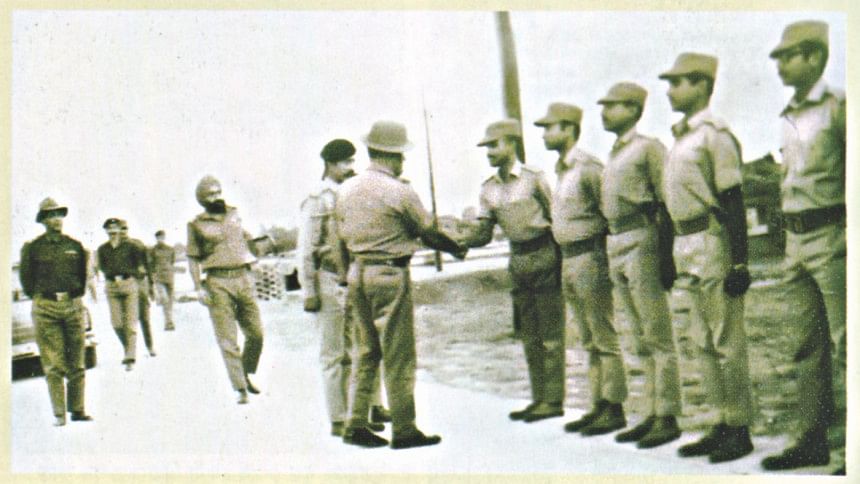
Strategic battles in the Belonia Bulge disrupting Pakistani lines

Mukti Bahini advance in the vulnerable Belonia salient

Freedom fighters contesting the key Belonia enclave

Sector 1 and 2 forces in Belonia Bulge operations

Actions highlighting the Bulge's logistical choke point

Guerrilla warfare exploiting the Belonia terrain
Sector 1 Visual Gallery • 1971 Bangladesh Liberation War