
The Belonia Bulge—a narrow, finger-like salient of East Pakistani territory protruding into India's Tripura state along the Muhuri River—emerged as one of the most strategically vital and symbolically important liberated zones in Sector 1 during the 1971 Bangladesh Liberation War. This enclave, approximately 16 km long and 4-6 km wide in parts of present-day Feni district, became the site of fierce battles and one of the earliest areas under sustained Mukti Bahini control.
Its liberation disrupted Pakistani supply lines, facilitated cross-border operations, and boosted morale by demonstrating that freedom fighters could hold territory against superior forces.Geography and Strategic ImportanceThe Bulge's unique shape created a natural corridor threatening Pakistani communications between Chittagong and Dhaka via Feni. A metre-gauge railway and two roads ran through it, making it a choke point for logistics.Proximity to Tripura allowed easy infiltration from Indian camps, arms supplies, and refugee movement. Holding the Bulge denied Pakistanis secure access to the border and exposed their flanks in the southeast.Sector 1 included the Bulge along the Muhuri River, with operations often coordinated with adjacent Sector 2.The Battles for ControlThree major battles defined the Bulge's fate:
Tags: Bangladesh Liberation War 1971, Belonia Bulge Liberated Zone, Battles of Belonia 1971, Mukti Bahini Sector 1, Captain Jafar Imam, Feni Parshuram, Muktijuddho, Joy Bangla
- First Battle (June 1971) — Four companies under Captain Jafar Imam (Sector 2) infiltrated covertly on June 1 to liberate Feni and establish a provisional government base. Initial success was followed by Pakistani counterattacks; combined Sector 1 and 2 forces held until late June.
- Second Battle — Mukti Bahini encircled Pakistani positions, leading to sieges and surrenders—a major setback for the occupation forces.
- Third Battle (November 10, 1971) — Forces besieged remaining garrisons; a Pakistani captain and 72 soldiers surrendered. Captain Jafar Imam hoisted the Bangladesh flag at Parshuram and Belonia amid celebrations.
- Safe Haven → Training grounds, medical posts, and rest areas for guerrillas.
- Administrative Symbol → Plans existed to locate the provisional Bangladesh government here.
- Launchpad → Raids on nearby highways and outposts originated from the zone.
- Disrupted the Dhaka-Chittagong highway segment.
- Tied down Pakistani troops, preventing reinforcements elsewhere.
- Inspired other sectors and drew international attention.
- Facilitated the final December offensive toward Chittagong.
Tags: Bangladesh Liberation War 1971, Belonia Bulge Liberated Zone, Battles of Belonia 1971, Mukti Bahini Sector 1, Captain Jafar Imam, Feni Parshuram, Muktijuddho, Joy Bangla

Mukti Bahini freedom fighters in the Belonia Bulge area
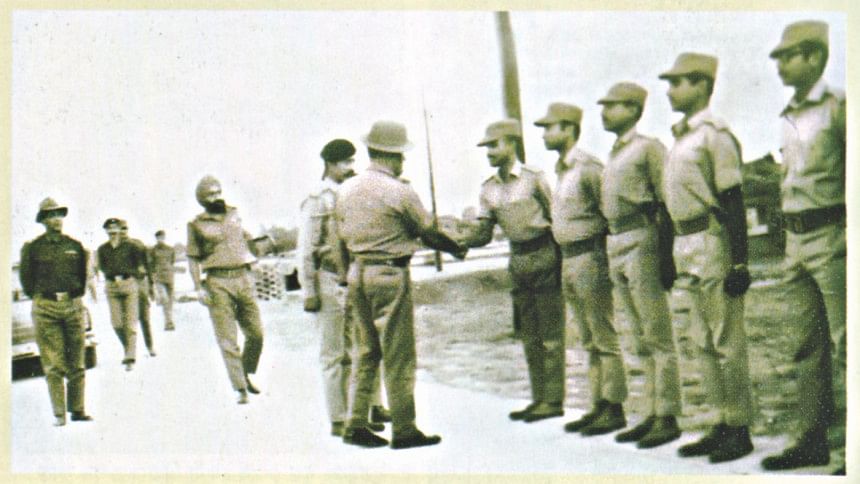
Intense fighting during the Battles of Belonia Bulge

Historical depiction of Belonia Bulge operations

Freedom fighters advancing in the Belonia region

Mukti Bahini forces securing the liberated Bulge

Determined guerrillas in the Belonia Bulge battles
Sector 1 Visual Gallery • 1971 Bangladesh Liberation War
