
The Mukti Bahini infiltration into the Belonia Bulge from the Tripura border represented one of the boldest and most sustained cross-border operations of the 1971 Bangladesh Liberation War. Starting in June 1971, thousands of trained guerrillas crossed the porous frontier from camps in India's Tripura state, transforming the narrow enclave into a contested and eventually liberated zone.
These infiltrations disrupted Pakistani logistics, established forward bases, and exemplified the critical role of Indian sanctuary in enabling Mukti Bahini offensives in Sector 1.The Tripura Border: Gateway for InfiltrationTripura shared a long, often unmarked border with Chittagong and Feni districts, including direct access to the Belonia Bulge along the Muhuri River. By mid-1971, over a million Bengali refugees flooded Tripura, overwhelming its resources but creating a recruitment pool.Indian authorities (BSF and army) established training camps across Tripura—Agartala, Devtamura, and border sites—where recruits received weapons training, guerrilla tactics, and explosives instruction.The border's terrain—rivers, forests, and hills—facilitated covert crossings at night or during monsoons, often guided by locals familiar with paths.Phases of InfiltrationInfiltrations occurred in waves:
Tags: Bangladesh Liberation War 1971, Mukti Bahini Infiltration Belonia, Tripura Border Crossing 1971, Belonia Bulge Operations, Sector 1 Guerrilla, Indian Camps Tripura, Muktijuddho, Joy Bangla
- Early Crossings (April-May 1971) → Small groups of defected soldiers and volunteers probed the border, conducting reconnaissance and minor raids.
- Major June Offensive → Led by Captain Jafar Imam, four companies (hundreds of fighters) infiltrated on June 1, launching the First Battle of Belonia Bulge. They overran positions rapidly.
- Sustained Flows (July-November) → Despite counterattacks, continuous infiltrations reinforced defenders. Trained batches crossed regularly, replacing losses and expanding operations.
- Final Buildup (December) → Mass movements supported the joint offensive, overwhelming Pakistani holdouts.
- Covert Movement → Night crossings using boats on rivers or footpaths; tribal guides from Tripura side assisted.
- Supply Lines → Arms and food shuttled back and forth; refugee networks aided logistics.
- Risks → Pakistani patrols, mines, and airstrikes; monsoons caused flooding and disease.
Tags: Bangladesh Liberation War 1971, Mukti Bahini Infiltration Belonia, Tripura Border Crossing 1971, Belonia Bulge Operations, Sector 1 Guerrilla, Indian Camps Tripura, Muktijuddho, Joy Bangla
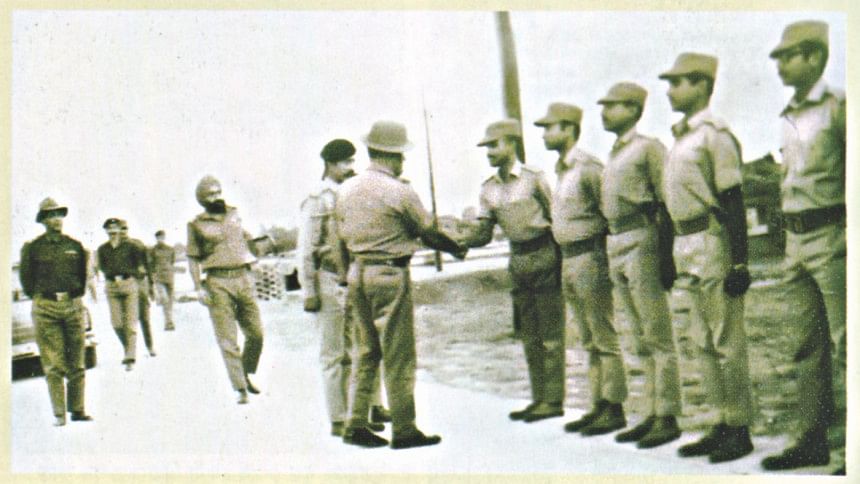
Mukti Bahini fighters during infiltration battles in Belonia Bulge

Guerrillas advancing after crossing from Tripura

Mukti Bahini training in Tripura before border infiltration

Border area in Tripura used for Mukti Bahini crossings

Operations following infiltration into Belonia enclave
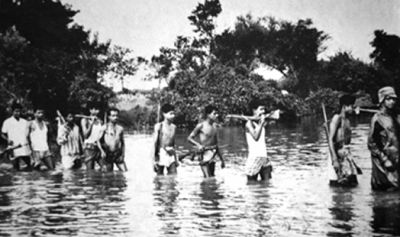
Guerrilla infiltration tactics across the Tripura border
Sector 1 Visual Gallery • 1971 Bangladesh Liberation War