
The liberation of areas along the Muhuri River centered on the Belonia Bulge enclave, a pivotal campaign in Sector 1 during the 1971 Bangladesh Liberation War. The Muhuri River formed the natural boundary of this salient in present-day Feni district, where Mukti Bahini forces waged a protracted struggle to seize and hold territory against Pakistani defenses.
Through daring infiltrations, tenacious defenses, and final offensives, freedom fighters liberated key towns like Parshuram, Belonia, and surrounding regions, disrupting enemy logistics and symbolizing early territorial gains.The Muhuri River TheaterThe Muhuri River originates in Tripura and flows through the Belonia Bulge before joining the Feni River. Its banks defined the enclave's northern and western edges, providing natural barriers for defense and routes for infiltration.Areas along the river—Parshuram, Belonia town, Shubar Bazar, and parts of Fulgazi—saw continuous fighting. Pakistani forces fortified positions to protect the Dhaka-Chittagong highway and railway running nearby.Mukti Bahini operations here, often joint with Sector 2, aimed to sever these lifelines and establish liberated zones.Phases of LiberationLiberation unfolded in stages:
Tags: Bangladesh Liberation War 1971, Liberation Muhuri River, Belonia Bulge Areas, Parshuram Belonia Feni 1971, Mukti Bahini Muhuri, Sector 1 River Operations, Muktijuddho, Joy Bangla
- Early Infiltration and First Battle (June 1971) → Fighters crossed the Muhuri under Captain Jafar Imam, overrunning positions and reaching river banks near Shubar Bazar. Pakistani counterattacks forced temporary withdrawal, but the operation gained experience and arms.
- Sustained Guerrilla Defense (July-October) → Continuous raids, ambushes, and sieges along the river harassed garrisons. Defenders used riverine cover for resupply from Tripura.
- Decisive Battles and Surrenders (November 1971) → Renewed offensives encircled Pakistani forces. On November 10, a captain and 72 soldiers surrendered; the Bangladesh flag rose at Parshuram and Belonia amid national anthem celebrations.
- Final Liberation (December 1971) → Joint Mukti Bahini-Indian advances liberated remaining areas, including Feni town on December 6, ahead of nationwide victory.
- Severed critical supply routes.
- Created one of the war's earliest permanent liberated zones.
- Inspired resistance and facilitated the southeastern offensive.
Tags: Bangladesh Liberation War 1971, Liberation Muhuri River, Belonia Bulge Areas, Parshuram Belonia Feni 1971, Mukti Bahini Muhuri, Sector 1 River Operations, Muktijuddho, Joy Bangla
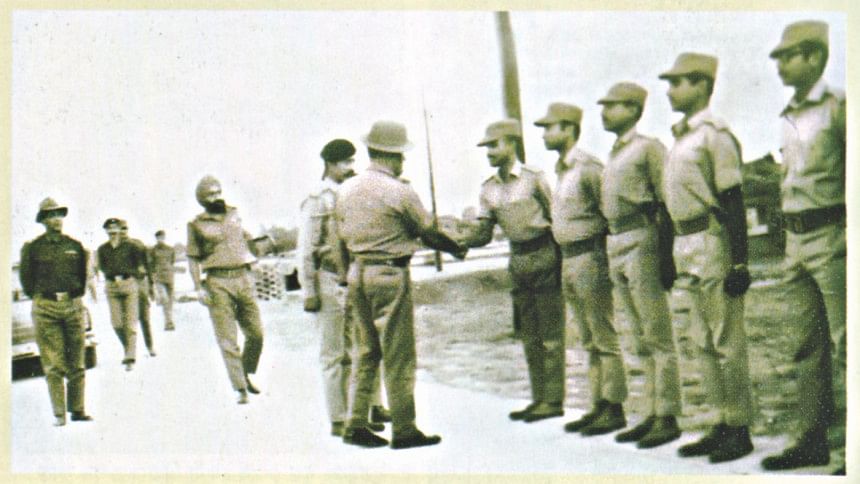
Mukti Bahini fighters along the Muhuri River in Belonia Bulge

Freedom fighters during liberation of Belonia areas
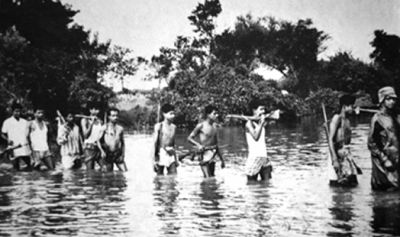
Guerrilla operations near Muhuri River banks

Mukti Bahini advancing along Muhuri River regions

Actions in the Belonia Bulge along the river

Young freedom fighters in Muhuri River theater
Sector 1 Visual Gallery • 1971 Bangladesh Liberation War